Solid Wood Closet Organizers — Real Lumber, Not Particle Board
If it’s called “wood,” it should actually be wood. Ours is.
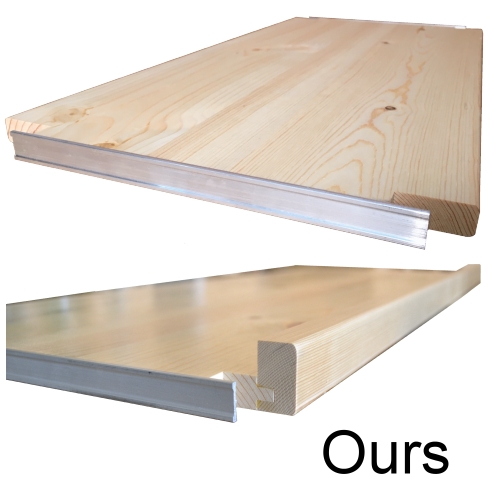
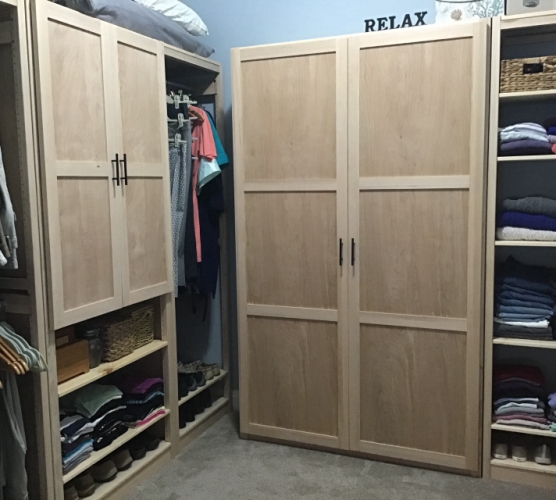
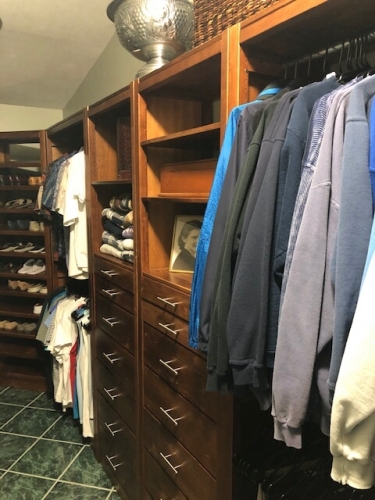
The phrase “solid wood closet organizer” means something specific. It does not mean particle board with a wood-grain printed laminate. It does not mean MDF with a wood-look melamine wrap. It does not mean plywood that’s 90% wood chips and glue. It means real, milled lumber — the same kind of wood you’d use to build cabinets or furniture from scratch. WoodClosets.com by Lundia is one of the only U.S. manufacturers building closet organizers entirely from solid lumber. That’s the standard the White House selected for their 2023 project, and the standard we’ve held for over 50 years of commercial and residential work.
What “Solid Wood” Actually Means
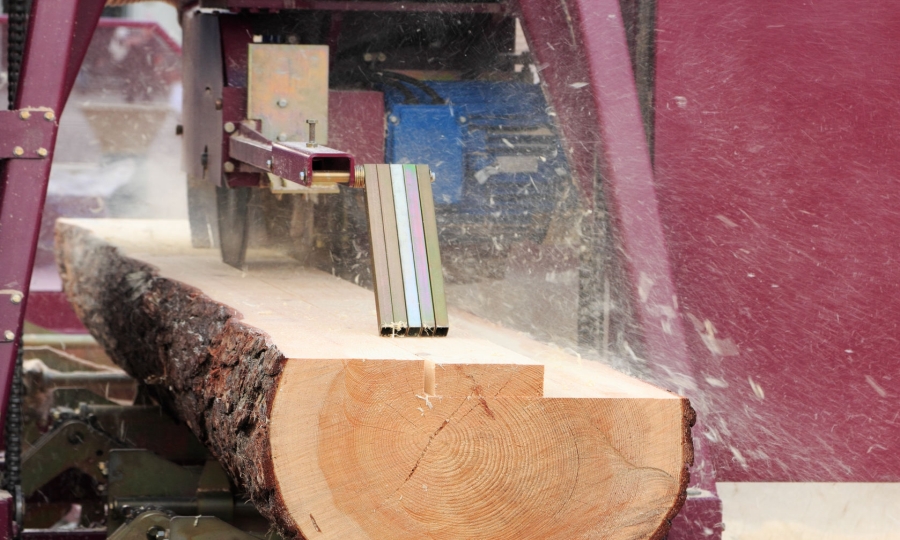
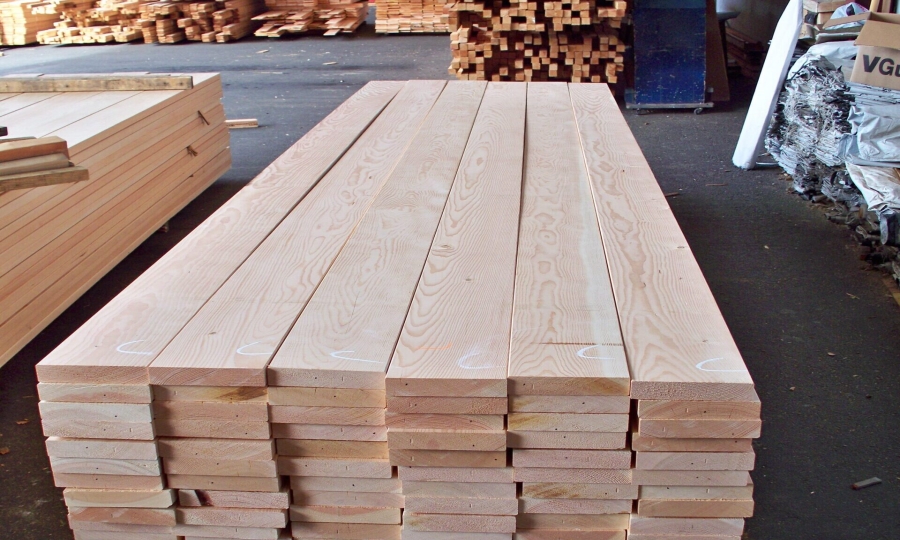
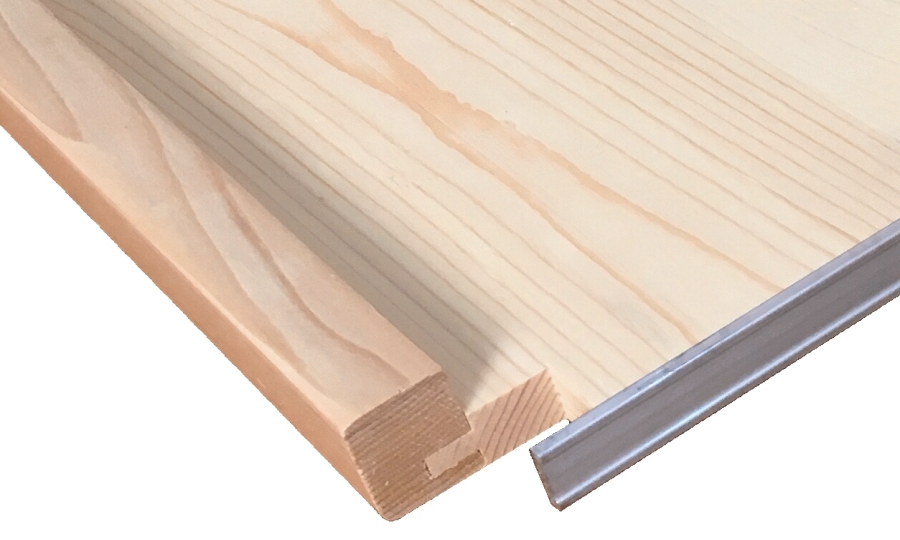
Walk into any big-box closet aisle and you’ll find products labeled “wood” that contain almost no actual wood. Here’s the difference, plainly:
- Particle board — Wood chips and sawdust glued together with urea-formaldehyde resin. The cheapest engineered wood product. Sags, swells, and off-gasses for years.
- MDF (Medium Density Fiberboard) — Wood fibers ground to powder, then bonded with formaldehyde-based resin under heat. Smoother than particle board but identical health concerns.
- Melamine — Particle board or MDF with a thin plastic-laminate sheet glued to the surface. The “wood look” is printed on the plastic. Edges chip easily.
- Plywood — Real wood veneers bonded with adhesive. Better than particle board but still glue-heavy.
- Solid wood (Lundia) — Lumber. Cut from a tree, milled to dimension, planed, sanded, finished. No glue layers, no resin, no chips. See the side-by-side comparison.
The Health Case for Solid Wood Organizers
The EPA classifies formaldehyde as a known human carcinogen. Particle board, MDF, and melamine all contain urea-formaldehyde adhesives that off-gas into the air for years after installation. California’s public health data attributes 86–231 lifetime cancer cases per million to particle-board exposure at “acceptable” levels — and most particle board sold in the U.S. is at or above those levels. CARB-compliant melamine is not formaldehyde-free; it is formaldehyde-reduced.
Solid wood does not off-gas. There’s no formaldehyde because there’s no resin holding chips together. We disclose every material we use, including the glue used in joinery and the finish applied to surfaces. View our complete Material Safety Data.
This matters most to people with chemical sensitivities, allergies, or autoimmune conditions — and to families with young children whose lungs are still developing. Read about closet solutions for chemical sensitivity.
Why Solid Wood Lasts 50+ Years
Particle-board organizer shelves typically begin sagging within 12-24 months of holding hanging clothes. The composite material has no grain to resist bending; it’s held together by glue, and glue creeps. Solid wood has a continuous grain structure that resists deflection — the same reason wood beams have been used in construction for thousands of years. Lundia is built to commercial-grade load standards — the same construction we’ve supplied to libraries, hospitals, and military bases for over 50 years, and many of those original installations are still in service today. See the full strength specifications.
Solid wood is also refinishable. If a shelf gets scratched in 15 years, you sand it and re-stain it. Try that with melamine.
Heavy-Duty Steel Hang Bars on Solid Wood Rails
The hang bar is the failure point in most closet organizers. Lundia uses solid wood rails that support heavy-duty steel hang bars — finished with a durable powder coat that’s as beautiful as it is tough. Unlike the bowed, sagging rods you’ll find in most particle-board systems, Lundia hang bars are built to heavy-duty commercial-grade standards and will never bow — period. The same hang bar construction we’ve installed in libraries, hospitals, and military buildings for over 50 years now hangs the clothes in your closet.
Choose Your Solid Wood Closet Organizer Depth
Made in America. Trusted by the White House.

The Only Formaldehyde-Free Choice for the White House
In 2023, the White House selected Lundia as the only U.S. manufacturer capable of meeting their solid-wood, formaldehyde-free standards.
Read the Full StoryCustomer Reviews
“The wood from Lundia was totally fine. I had zero reaction. If there were any chemical off-gas, this bloodhound would smell it!”
“Our Lundia closet looks custom without the custom cost. Plus — solid wood and adjustable!”
“This came in half the price of The Container Store’s top of the line closet and California Closet!”
Get a Free Solid Wood Closet Organizer Design
Send us your closet dimensions and how you want to use the space — we’ll design a custom solid-wood closet organizer for free, with no obligation. Or browse real customer projects for inspiration.
Solid Wood Closet Organizer FAQ
How can I tell if a closet organizer is really solid wood?
Look at a cut edge. Solid wood shows continuous grain through the entire thickness. Particle board shows visible chips and dust held together by glue. MDF shows a uniform powdery cross-section. Melamine has a thin colored plastic layer over particle board or MDF. See annotated photos of each material.
What kind of wood does Lundia use?
Lundia closet organizers are built from premium solid lumber sourced from FSC-certified forests. We disclose every component of our material chain. Read about our sourcing.
Are solid wood closet organizers heavier than particle board?
Yes — and that’s a feature, not a bug. The weight comes from real material. Lundia ships flat-pack, so the per-piece weight is manageable for one or two-person assembly.
Do solid wood organizers cost more than particle board?
Up front, often only slightly more — sometimes the same. Over a 20-year lifespan, solid wood is dramatically cheaper because particle board organizers need replacement multiple times. See pricing examples.